



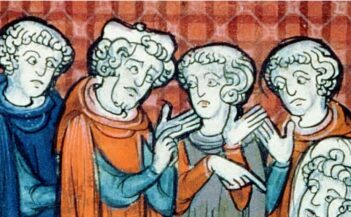









The article follows cancer and lupus as unstable names in medieval medicine, constantly displaced by what physicians did, what texts
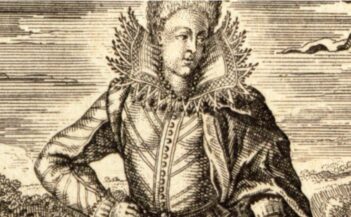
Franciscus Sylvius and his pupil Reinier de Graaf transformed iatrochemistry from a speculative medical theory into a clinically grounded and
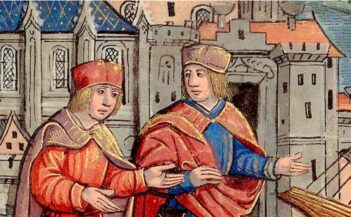
Medieval physicians interpreted the brain through uroscopy, tracing a diagnostic reasoning that linked urine, humoral imbalance, and cerebral function. This
Focusing on Philoponus's commentary on Aristotle’s "Physics", this lecture will examine the recovery of the Greek text and its later
Sharhzad Irannejed examines medieval Islamicate diagrams of the brain and its ventricles as variable scribal artefacts, arguing that their visual
What are occult qualities, and why did they become a central problem in Renaissance natural philosophy and medicine? This lecture

Studiolo Digital Humanities Lab is a new format for the Winter School, designed to meet the needs of those who,

The article follows cancer and lupus as unstable names in medieval medicine, constantly displaced by what physicians did, what texts
Franciscus Sylvius and his pupil Reinier de Graaf transformed iatrochemistry from a speculative medical theory into a clinically grounded and
Medieval physicians interpreted the brain through uroscopy, tracing a diagnostic reasoning that linked urine, humoral imbalance, and cerebral function. This
“Dell’Elettricismo” (1746) was the first Italian treatise to systematically connect electricity with physiology and medical practice. By analysing its experiments
How were miners affected by their work? This article traces the illnesses they faced, the vocabulary they created to describe
Paul Sandro Heidelbach explores a 1688 satire that linked Kenelm Digby’s "sympathetic powder" to a supposed method for finding longitude