Rupescissa’s Quintessential Medicine
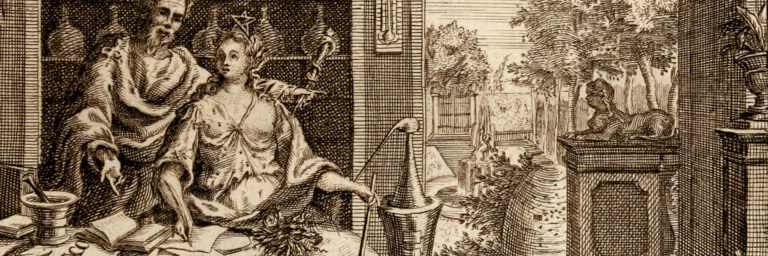
This presentation will review newly-uncovered information about the background to Rupescissa's "De famulatu philosophie" (1352 ).


This presentation will review newly-uncovered information about the background to Rupescissa's "De famulatu philosophie" (1352 ).
In this article, Gabriele Torcoletti reconstructs the intellectual architecture of Hippocrates' "Airs, Waters, Places", showing how analogy and polarity shaped
What if the Scientific Revolution was not the birth of modern science, but a shorter and deeper transformation in how
Through an examination of Katharina Kepler's witchcraft trial, Marco Ghione shows how ambiguous bodily symptoms were transformed into legal evidence
Is infertility really a modern concern? Anna Gili explores how medieval physicians understood infertility and its treatment, tracing the transmission
Long regarded as an exceptional voice in early modern thought, Oliva Sabuco is revisited by Jil Müller, who reconstructs her
In this lecture, Dr Anna Gili examines the treatment of leprosy in the Kitāb al-Malakī, offering new insights into medieval
Why did Galenic pharmacopoeia survive for nearly two millennia? This lecture explores the intellectual, cultural, and practical reasons behind its
This VivaMente conference explores deafness and the deaf person in the premodern period through historical, medical, and socio-cultural perspectives.
Few texts in history have enjoyed the centrality of Aristotle’s De Anima. The work presupposes and at the same time