

Deafness in the Premodern Mediterranean


VivaMente Conference in the History of Ideas
Deafness
in the Premodern Mediterranean
17-18 November 2026
Organised by
Davide Astori
Nicola Reggiani
Keynote Speakers
Ilaria Cariddi
Stephanos Efthymiadis
Christian Laes
Nazan Maksudyan
Mara Rescio
Fotis Vasileiou

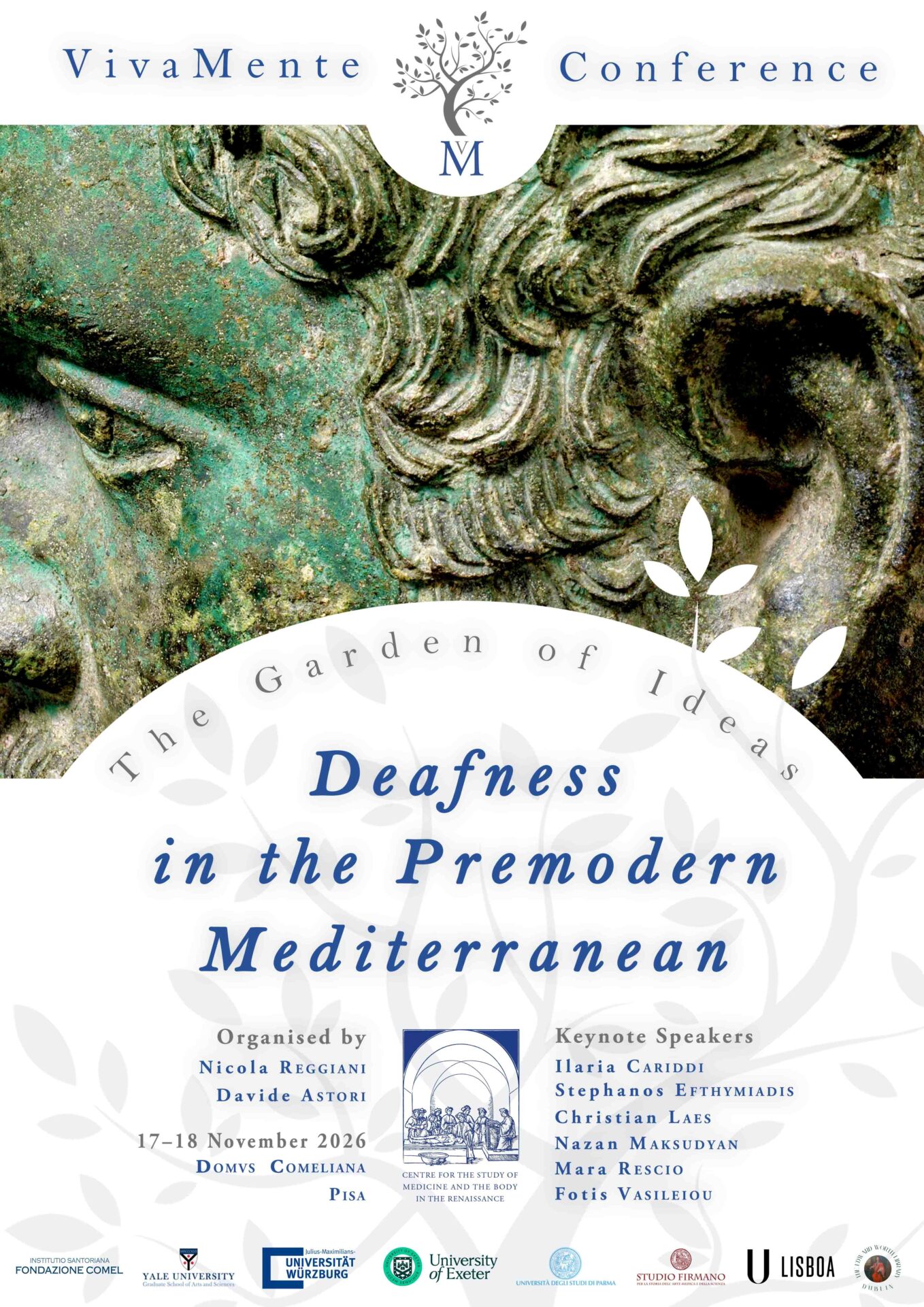
Click to download the poster
Conference Topics

Medical Definitions and Classifications of Deafness
Disability Studies
Philosophical and theological theories of hearing, speech, silence, and cognition
Language, education, and sign systems in premodern societies
Premodern epistemologies of normality, impairment, and human difference
Programme
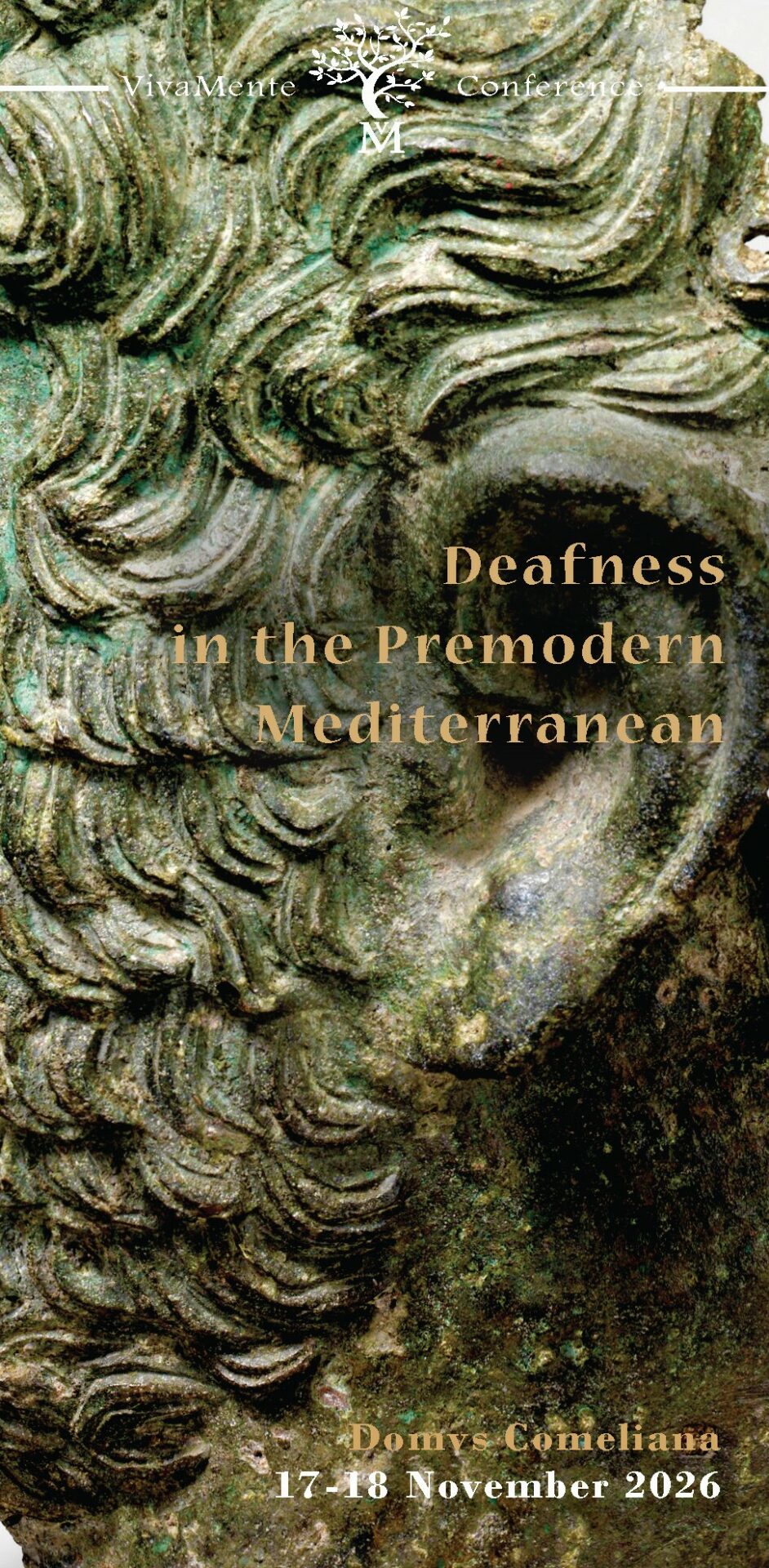
Click to download the programme
Abstracts
Forthcoming
Comèl Grant
Bursaries to attend the conference are available under the competitive Comel Grant scheme.
This VivaMente Conference explores deafness and the figure of the deaf person in the Mediterranean Antiquity and pre-modern ages through historical, medical, and socio-cultural perspectives.
Despite its historical significance, this topic remains underexplored within disability history and Deaf culture studies, although recent scholarly interest in ancient disabilities has expanded to include social and cultural dimensions. In fact, in recent years, academic interest in disabilities in the ancient world has undergone a significant renewal, bringing to light new research perspectives that move beyond the traditional pathology-centered approach to encompass a broader consideration of social and cultural dynamics: see e.g. C. Laes (ed.), Disability in Antiquity (London – New York, 2017); C. Laes, Disabilities and the Disabled in the Roman World. A Social and Cultural History (Cambridge, 2018); C. Laes (ed.), A Cultural History of Disability in Antiquity (London, 2020); A.F. Morris, H. Vogel (eds.), Disability in Ancient Egypt and Egyptology. All Our Yesterdays (London – New York, 2025).
The history of deafness and deaf individuals represents a field of study that requires an interdisciplinary approach, capable of integrating historical sources with the latest advancements in linguistics, medical history, and the sociology of disability. In this framework, we believe that tracing the historical roots of deafness—both from the objective perspective of medical history and from the subjective viewpoint of social perception—can provide a valuable contribution to contemporary discussions on the topic. The analysis of documentary and literary sources allows us to identify representations and narratives of deafness in various historical and geographical contexts, highlighting how societies have perceived, classified, and interacted with deaf individuals over the centuries.
The conference is also set within a broader context of increasing recognition of Deaf culture at both public and academic levels. The official recognition of Italian Sign Language (LIS) in 2021 represented a fundamental step in affirming the rights of deaf individuals, as did the establishment of the degree program in Italian Sign Language Interpreting at the University of Parma in 2023. This program, one of only three currently active in Italy, has been founded and chaired for three years by Davide Astori, co-organiser of this conference. This academic initiative aligns with a broader scholarly trend aimed at enhancing the historical, cultural, and communicative aspects of Deaf communities.
At the same time, the conference is intended to situate deafness within the broader framework of the history of ideas. Rather than treating deafness only as a social condition or as an object of modern Deaf culture studies, the conference will examine the changing intellectual categories through which deafness was defined, explained, and classified in ancient and medieval societies. Particular attention will be paid to the historical transformation of concepts such as hearing, speech, silence, impairment, education, communication, and disability, and to the ways in which these categories were shaped by philosophical, theological, legal, linguistic, and medical discourses.
The goal of the conference is, therefore, to foster dialogue among scholars from different disciplines in order to construct the most comprehensive and multifaceted picture possible of deafness in premodern history. This reflection, beyond shedding light on specific aspects of ancient and medieval culture, also aims to encourage a critical debate on the persistence of certain historical conceptions in contemporary perceptions of deafness and disability as a whole.
Organisation
Scholars working on any area relevant to the conference are invited to submit a proposal consisting of a title and an abstract. Proposals should not exceed 250 words and should be accompanied by a short biographical note. Contributions may address any aspect relevant to the conference’s theme (ancient, medieval, and early modern), as well as broader comparative or methodological approaches.
The deadline for submission is 10 September 2026.
The organisers will select the proposals with a view to both the conference programme and the publication of the proceedings. Selected speakers will be invited to complete the registration process after acceptance. The conference proceedings will be submitted for peer-reviewed publication in the series Palgrave Studies in Medieval and Early Modern Medicine.

Conference type: Hybrid
Dates: 17-18 November 2026
Deadlines
Proposal Submission
10 September 2026
Comèl Grant Application
30 September 2026
Registration
In Presence: 30 October 2026
Online: 15 November 2026
Queries and Proposal Submission
Registration Fees
Check Out
Conference Proceedings

Credits
Scientific Direction:
Fabrizio Bigotti
General Coordination:
Tomaso M. Pedrotti Dell’Acqua
Samuele Filippi