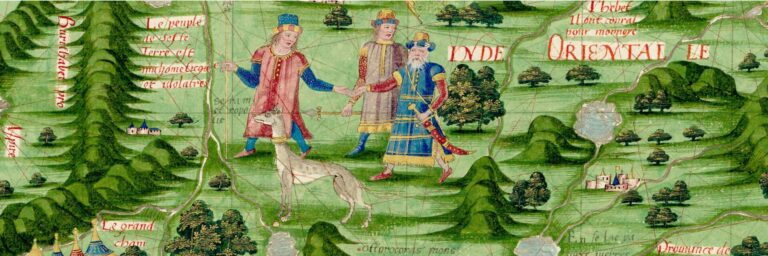
Like Places, Like Peoples
In this article, Gabriele Torcoletti reconstructs the intellectual architecture of Hippocrates' "Airs, Waters, Places", showing how analogy and polarity shaped


In this article, Gabriele Torcoletti reconstructs the intellectual architecture of Hippocrates' "Airs, Waters, Places", showing how analogy and polarity shaped
Through an examination of Katharina Kepler's witchcraft trial, Marco Ghione shows how ambiguous bodily symptoms were transformed into legal evidence
Is infertility really a modern concern? Anna Gili explores how medieval physicians understood infertility and its treatment, tracing the transmission
Set against the world of cheap print and wonder literature, this article investigates the case of a Spanish nun who
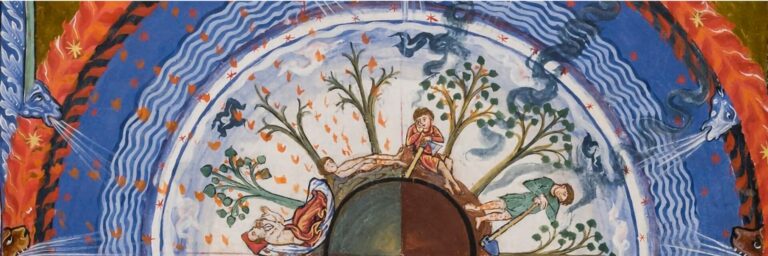
The article examines "Causae et curae" and the "Physica "to show that Hildegard explains disease through the corruption of the
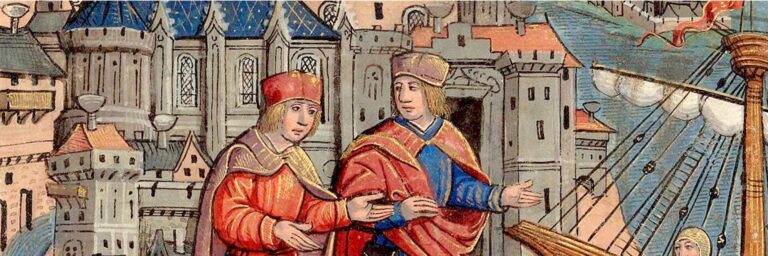
Through the case of Pere d’Olesa and other Spanish physicians, the article shows how geographical mobility enabled medical careers to
The article follows cancer and lupus as unstable names in medieval medicine, constantly displaced by what physicians did, what texts
Franciscus Sylvius and his pupil Reinier de Graaf transformed iatrochemistry from a speculative medical theory into a clinically grounded and
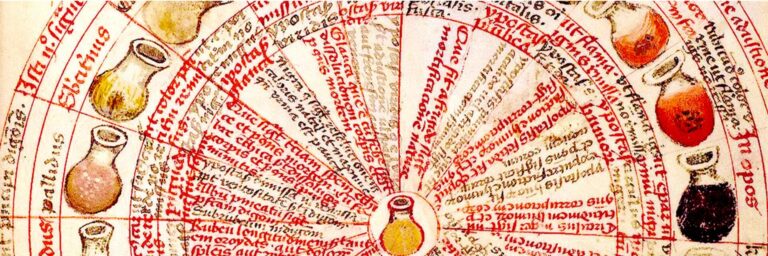
Medieval physicians interpreted the brain through uroscopy, tracing a diagnostic reasoning that linked urine, humoral imbalance, and cerebral function. This
“Dell’Elettricismo” (1746) was the first Italian treatise to systematically connect electricity with physiology and medical practice. By analysing its experiments