










1 / 26
 RETHINKING THE HISTORY OF LEPROSY IN THE MEDIEVAL MEDITERRANEAN - A. Gili (Padua)GALEN'S REMEDIES BEYOND THE RENAISSANCE - F. Bigotti (CSMBR) and J. Wilkins (Exeter)STAYING FRESH IN EARLY BYZANTIUM - M. Kokoszko and Z. Rzeźnicka (University of Łódź)THE COLOUR OF DREAMS. The Physiology of Oneiric Experience - M. Signori (IMT Lucca)YIDDISH MEDICINE IN TIMES OF EPIDEMICS - D. Zaidman-Mauer (University of Amsterdam)ORBS OF BLOOD IN 14TH-CENTURY PERSIA - B. Kavoussi (École Normale Supérieure, Paris)1 / 26


-

HIGHLIGHTS

Long regarded as an exceptional voice in early modern thought, Oliva Sabuco is revisited by Jil Müller, who reconstructs her

In this lecture, Dr Anna Gili examines the treatment of leprosy in the Kitāb al-Malakī, offering new insights into medieval

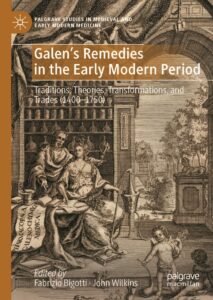
Why did Galenic pharmacopoeia survive for nearly two millennia? This lecture explores the intellectual, cultural, and practical reasons behind its

This VivaMente conference explores deafness and the deaf person in the premodern period through historical, medical, and socio-cultural perspectives.

Few texts in history have enjoyed the centrality of Aristotle’s De Anima. The work presupposes and at the same time

The lecture will focus on a group of selected illustrative recipes for body cleansers and powdered deodorants from Book VIII
-
UPCOMING EVENTS

Few texts in history have enjoyed the centrality of Aristotle’s De Anima. The work presupposes and at the same time
-
FORMA FLUENS

The article follows cancer and lupus as unstable names in medieval medicine, constantly displaced by what physicians did, what texts
Franciscus Sylvius and his pupil Reinier de Graaf transformed iatrochemistry from a speculative medical theory into a clinically grounded and
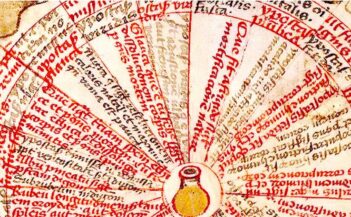
Medieval physicians interpreted the brain through uroscopy, tracing a diagnostic reasoning that linked urine, humoral imbalance, and cerebral function. This
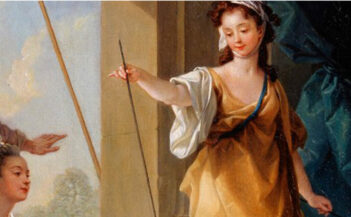
“Dell’Elettricismo” (1746) was the first Italian treatise to systematically connect electricity with physiology and medical practice. By analysing its experiments
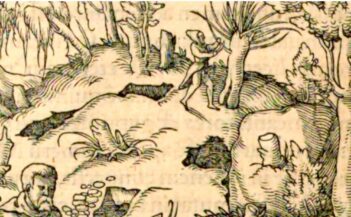
How were miners affected by their work? This article traces the illnesses they faced, the vocabulary they created to describe
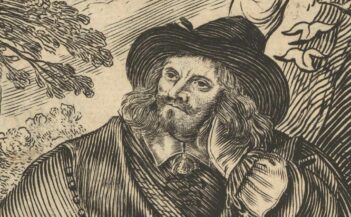
Paul Sandro Heidelbach explores a 1688 satire that linked Kenelm Digby’s "sympathetic powder" to a supposed method for finding longitude
-
MEDIA GALLERY
 Visit Our YouTube Channel