

The Epistemic Revolution 1610-1680
The Epistemic Revolution ca. 1610-1680s
A New Notion to Define Deep Conceptual Change
Domenico Bertoloni Meli
21 October 2026 – 5 PM (CET)
The notion of the “Scientific Revolution” is generally understood as the time from Galileo — or at times Copernicus — to Newton that saw the beginning of “modern science”.
This notion has been hotly debated: there is disagreement as to how best to characterize it, when it occurred, and even whether there was a Scientific Revolution. Several historians have recently argued that it should be jettisoned or proposed alternative characterizations.
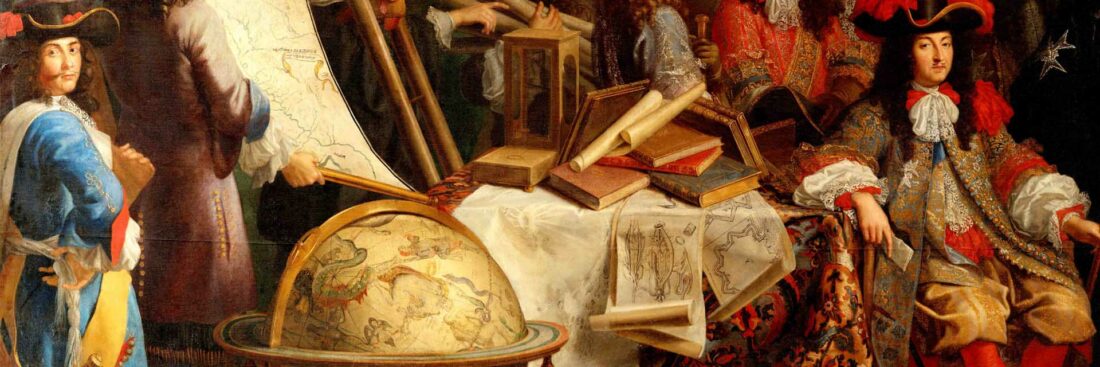
This talk proposes a new notion with which historians may feel more comfortable: the Epistemic Revolution. The Epistemic Revolution is defined not in relation to modern science, which differs widely from that of the mid-20th century and is changing in front of our eyes, but “locally”, in terms of what preceded and followed it. Two defining characters of the Epistemic Revolution are those of mechanism and new instruments, such as the telescope, the microscope, the barometer, the thermometer, and the air pump.
Lastly, the timeframe, from c. 1610 to the 1680s, is shorter than usual and excludes Newton’s mature work, such as Philosophiae naturalis principia mathematica (1687), which is not seen as the telos of the Epistemic Revolution but as a key text of the investigations of nature in the Enlightenment.
About the Speaker ...
Domenico Bartoloni Meli is Provost Professor of History and Philosophy of Science and Medicine at Indiana University Bloomington.
Domenico Bertoloni Meli (Ph.D. from Cambridge University 1988) has received many fellowships and grants, most recently a John Simon Guggenheim Fellowship. He has widespread research interests, including the mathematical and medical disciplines from the Renaissance to the Enlightenment, especially mechanics and anatomy. He has published many articles and books, his most recent book, Investigations of Nature. Europe in a Global World, 1450s-1780s (Pittsburgh University Press, 2025), explores the profound changes in the intellectual and social landscape that were tied to technological advances in navigation and warfare and led to the rise of European expansion and colonialism.