

Vesalius’ Fabrica as a Visual System
Vesalius' «Fabrica»
as a Visual System
Historiated Initials and the Temporality of Anatomical Practice
Jieun Bang
12 January 2027 – 11 AM (CET)
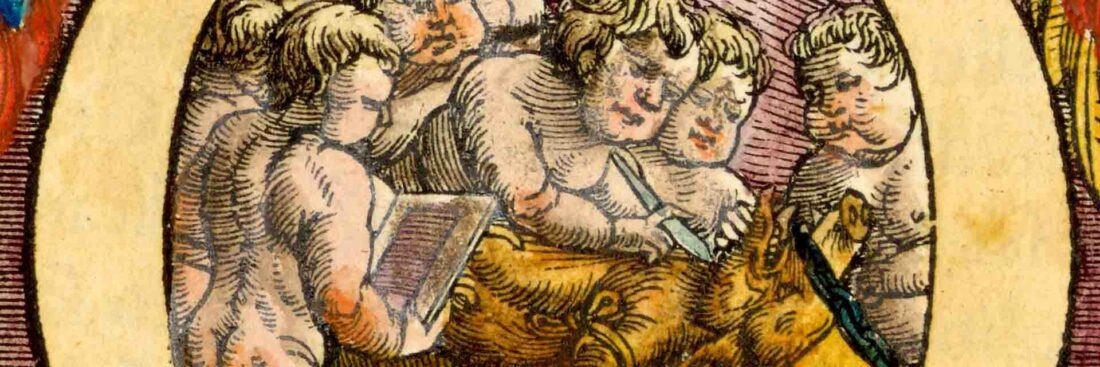
In this talk, I will look at the historiated initials in Andreas Vesalius’s De humani corporis fabrica libri septem (1543) and show that these initials were more than decorations: they also helped readers understand the practical steps involved in dissection.
I will focus on several initials showing how bodies were obtained (large I), transported (L), dissected and observed (large Q, Q), and how skeletal specimens were prepared (large O, C, P). These images show that anatomical practice involved a series of steps before, during, and after dissection.
Together, they suggest that anatomical knowledge was produced through this sequence of practical activities. While the large anatomical plates mainly showed the structures of the human body, the initials showed the practical work involved in studying them. In this sense, the two types of images complemented each other.
I will also discuss initials showing surgical procedures (F, H), bloodletting (V), and what appears to be an enema (L). These scenes suggest that the Fabrica was closely connected to medical practices of the time. The initials thus helped readers understand both how anatomical knowledge was produced and how it was used in medical practice.
About the Speaker ...
Jieun Bang (방지은) is a visiting professor in the Department of Art History and History at Myongji University in Seoul, South Korea.
She obtained her PhD in February 2026 with a dissertation titled The Development of Anatomy in 16th-Century Western Europe and Changes in Social Perception of Anatomy: Focusing on Andreas Vesalius. Her dissertation, which received an honourable mention in the 2026 Santorio Award for Excellence in Research, examines the development of 16th-century anatomy from various perspectives within a socio-cultural context—not merely as an accumulation of medical knowledge, but through changes in the perception of the human body, medical education, printing culture, and knowledge exchange.