

Infertility Concerns in the Early Twelfth Century


FORMA FLUENS
Histories of the Microcosm
Infertility Concerns
in the Early Twelfth Century
Anna Gili
University of Padua
Santorio Global Fellow

Since the nineteenth century, historians of Latin medicine have identified the late eleventh century as a period of renaissance, during which a wealth of knowledge was made available to the West via translation from Arabic. The Benedictine monk Constantine the African towers above as the champion of this renaissance, as he was the first to undertake the large-scale endeavour of translating Arabic medical works into Latin.[1] Recent studies have emphasised the continuity between his activity and earlier Latin medical texts, particularly those from the Late Antique period. Moreover, scholars are now beginning to recognise that Constantine was part of a wider team who, in the Monte Cassino scriptorium, engaged in the translation, revision, copying, studying, and updating of texts.[2] Consequently, the term ‘renaissance’ appears inadequate to describe the intricate and multifaceted engagement with medical texts that occurred in Monte Cassino during the second half of the eleventh century. However, an increase in detailed studies promises a more nuanced understanding of this period in the history of medieval medicine and science in the years to come.
This complexity can be best appreciated in the domain of gynaecology, as highlighted in Monica H. Green’s seminal studies.[3] Manuscript and textual evidence show that Late Antique medical works that discussed women’s diseases circulated, were read, and on occasion were commented upon and revised in the Monte Cassino scriptorium. This was happening at the same time as Constantine was devoting himself to the translation of Arabic medical works that gave much space to gynaecology. This is the case, for instance, of the Pantegni, i.e. Constantine’s version of al-Maǧūsī’s Kitāb al-Malakī, an Arabic medical encyclopaedia that distributed over two sections – theory and practice – the entirety of medical science, from physiology to surgery.[4]
It is worth noting that many of the sources used by al-Maǧūsī to compose the Kitāb al-Malakī were Greek, as the Graeco-Arabic translation movement of the ninth century had made available to Arabic scholars most of Hippocrates’ and Galen’s corpora, as well as the encyclopaedias later composed by Oribasius and Paulus Aegineta and many works from the Late Antique Alexandrian medical school.[5] These are the very same sources that the Late Antique Greek–Latin translations had conveyed to Latin readers, so Constantine and his team, as well as their readers, were likely familiar with them. It is therefore worth questioning how the ‘new’ translations from Arabic interacted with these pre-existing Latin medical works, given their genetic commonalities.
One of the gynaecological concerns most widely discussed in the Kitāb al-Malakī is infertility. Chapter 39 of Book IX of its theoretical section discusses the pathological understanding of infertility at length, while therapies are recommended in Chapter 24 of Book VIII of its practical section. Al-Maǧūsī gathers information from a variety of sources–most prominently, Hippocrates’ Aphorisms with Galen’s commentary, Aristotle’s biological treatises, Paulus Aegineta’s Pragmateia, and the Small Compendium of the Syriac-Arabic author Yuḥannā ibn Sarāfiyūn (ninth century)[6]–and manages to create a synthesis that arranges this rich material into a well-organised structure that has no parallel in the preceding tradition. The structuring of knowledge adopted in the Kitāb al-Malakī is therefore al-Maǧūsī’s most prominent contribution to the history of infertility in Arabic medical works up to the tenth century, and this is true also for its transmission to Latin.
When Constantine translated the Kitāb al-Malakī as Pantegni, most of the above-mentioned sources consulted by al-Maǧūsī were already available in Latin translations, especially in the theoretical domain. Mustio’s Gynaecia, for instance, gives an aetiological explanation of infertility that bears relevant similarities to the Kitāb al-Malakī, and most of the procedures to assess each partner’s fertility have their origins in the Hippocratic and Aristotelian corpora circulated in Latin gynaecological works. However, as al-Maǧūsī created, in Arabic, an unprecedented synthesis of fertility-related knowledge, its transmission into Latin marked the beginning of an encyclopaedic approach to the subject that would inform the entire subsequent tradition, as highlighted in Green’s Making Women’s Medicine Masculine (Oxford, 2008).
Constantine’s translation of the Kitāb al-Malakī as Pantegni was not complete, as it included only some of the books of the practical section. Therefore, Book VIII of this section–where treatments for infertility are discussed–made its way into the Latin West not through the Pantegni but some decades later, around 1127, when Stephanus ‘the Philosopher’ in Antioch undertook a full retranslation of al-Maǧūsī’s Kitāb al-Malakī, his Liber Regalis, to complement the parts that had been left out by his predecessor. In this way, al-Maǧūsī’s advice on treating infertility also entered the Latin tradition, again in a dialectic of continuity and innovation. While some of the conception-promoting ingredients recommended by al-Maǧūsī were a traditional part of the Greek and Latin recipes–like hare’s rennet and different types of animal fats–some were new Arabic simples whose employment in pessaries was described here for the first time.
In addition to the features of the Kitāb al-Malakī highlighted so far, and as noted in Sara Verskin’s history of infertility in Arabic legal and medical sources,[7] al-Maǧūsī’s discussion of infertility is marked by its taking into account of not only female but also male infertility. Besides some aetiological and semiological references in the theoretical section, Chapter 44 of Book IX of the practical section describes a surgical intervention to treat hypospadias in infertile men, mainly based on the surgical book of Paulus Aegineta’s Pragmateia. As this part of the Pragmateia had never been translated into Latin before, it was through the Kitāb al-Malakī that this surgical knowledge, also in the domain of gynaecology and urology, made its way into Western medical science. In the case of Chapter 44, on hypospadias, it became available to Latin readers in a double version. Besides the translation by Stephanus the Philosopher in the Liber Regalis, this part of Book IX of the Kitāb al-Malakī was also translated by Iohannes Afflacius, a collaborator of Constantine, together with the unknown Rusticus Pisanus during the siege of Maiorca in 1113/1114. Iohannes’ and Rusticus’ interest in this surgical procedure is shown by the fact that, when compared to the Arabic, their translation includes additional explanations of some of the surgeon’s actions, probably based on their understanding of the various phases of his intervention.

Anna Gili is a postdoctoral researcher at the University of Padua, working on the project “The Construction of Collective Memory in Byzantium” (CoMByN). In February 2026, she was awarded a cotutelle de thèse PhD in Latin and Arabic Philology by the University of Padua and the Julius-Maximilians-Universität Würzburg. In 2025, she received the Santorio Global Fellowship to conduct research at the University of Exeter on a project entitled “Infertility Concerns in the Early Twelfth Century”. She is the author of the monograph Leprosy in the Mediterranean Medical Literature (De Gruyter 2025).
This overview of the Latin reception of al-Maǧūsī’s discussion of infertility shows that readers of the Kitāb al-Malakī like Constantine, Iohannes Afflacius, and Stephanus could perceive it as both belonging to a shared tradition of medical knowledge rooted in Greek wisdom and as a bearer of remarkable innovations in its structuring of this knowledge and in its expansions of therapeutic advice. That Late Antique gynaecological works were known around Monte Cassino is shown by the study of a still little-known and unedited treatise ascribed to Iohannes Afflacius, the Liber aureus.[8] Its chapter on infertility opens by quoting passages on the adequate regimen to promote conception from Caelius Aurelianus’ Gynaecia, a Late Antique translation of Soranus’ gynaecological work, which is at present only partially preserved in a single thirteenth-century manuscript.[9]
Afflacius then moves on to different causes of and related therapies for infertility, a discussion which is almost entirely based on the Latin translation of Paulus Aegineta’s Pragmateia. The main witness of this translation now extant is a late eleventh-century manuscript in Beneventan script, most probably copied in the Monte Cassino scriptorium at the time of Constantine’s activity. The chapter ends with a long recipe of ‘the major of all medicaments’ to make a woman pregnant, which contains some ingredients of Arabic origin and was therefore probably taken by Afflacius from a (still unidentified) Arabic source. Afflacius’ juxtaposition of extracts is a most telling instance of the coexistence of Latin and Arabic tesserae of knowledge on conception and its promotion, which were conceived of as harmonisable and complementary to one another.
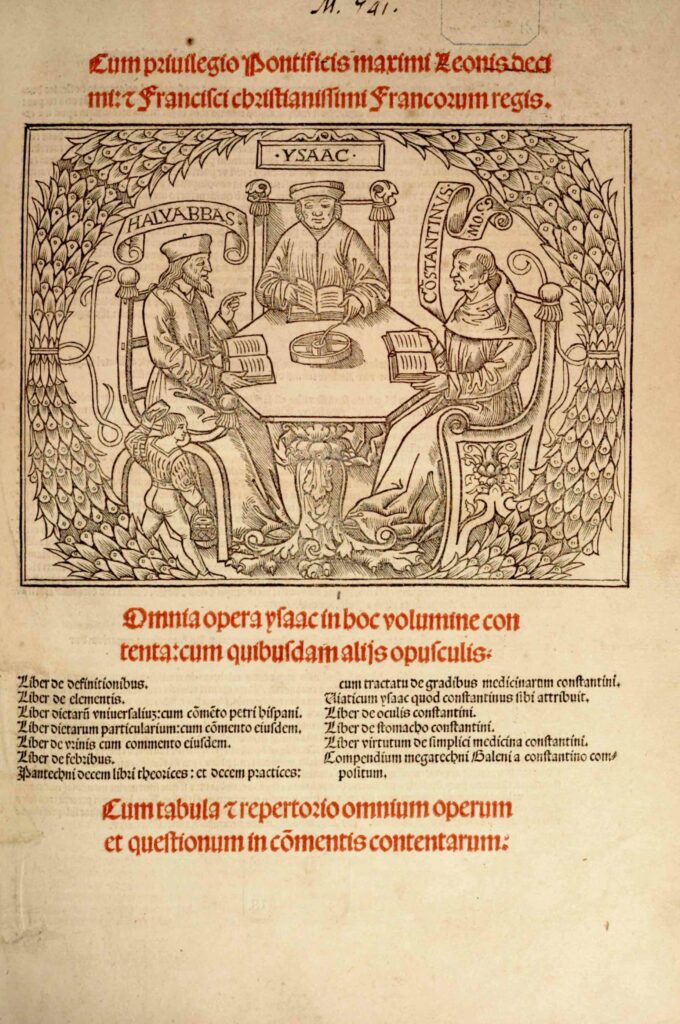
Figure 1. Title page of the 1515 Lyon edition of Constantine the African’s works (2 Med.g. 84 a, Bayerische Staatsbibliothek München).
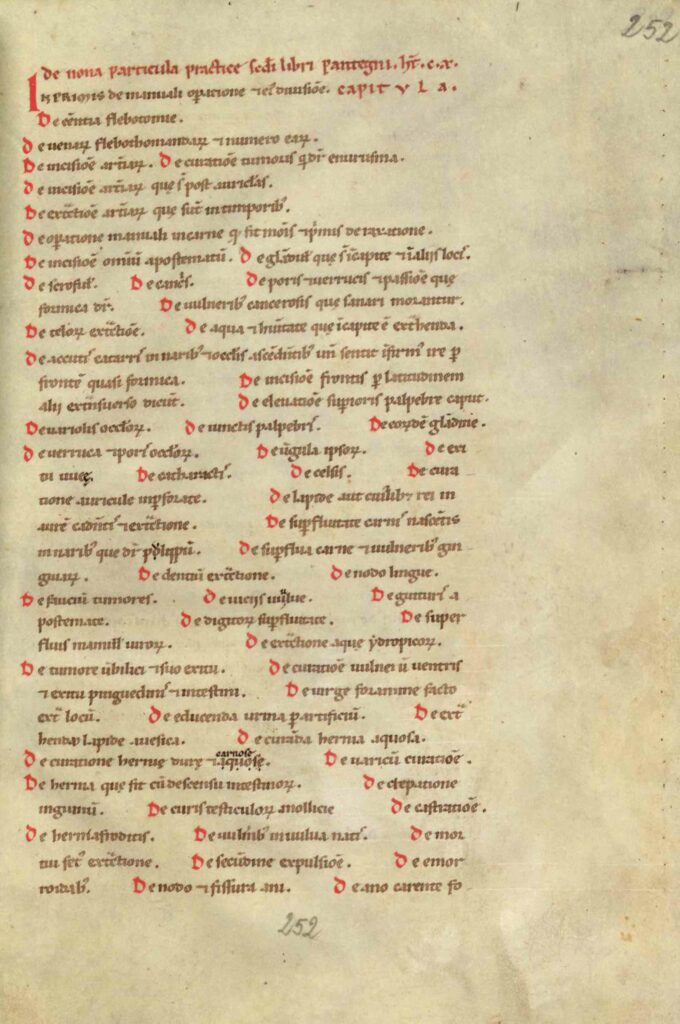
Figure 3. Index of Pantegni‘s surgical book (Abteilung Handschriften und Historische Drucke, Lat. fol. 74, Staatsbibliothek zu Berlin—Preußischer Kulturbesitz).
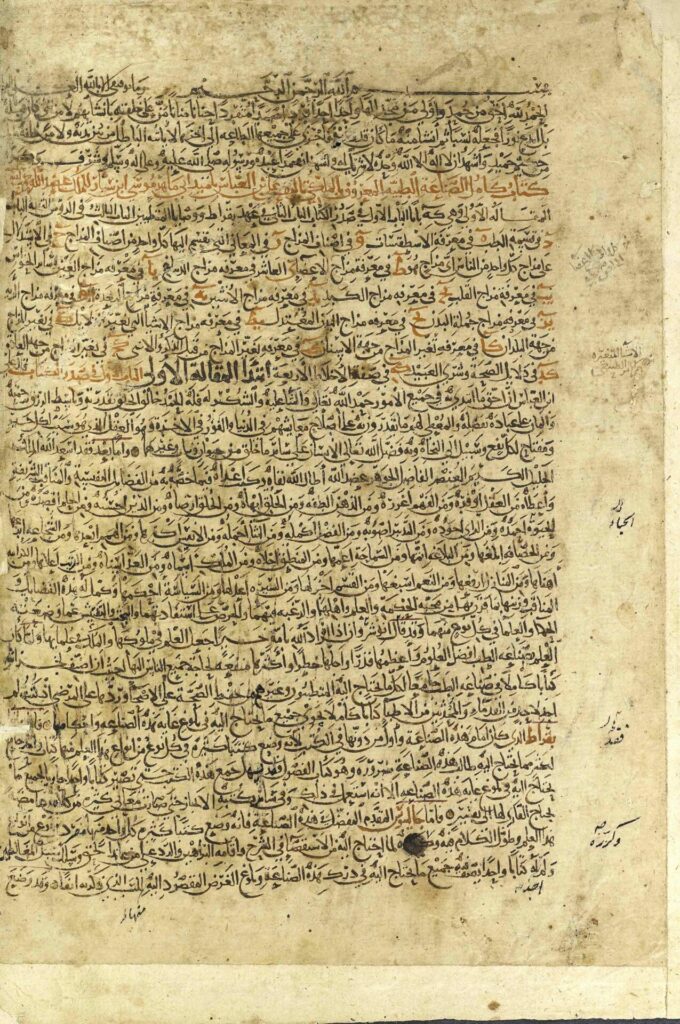
Figure 2. Beginning of al-Mjūsī’s Kitāb al-Malakī copied at Ḥarrān in 1190 (MS Garrett no. 1S, Princeton University Library).
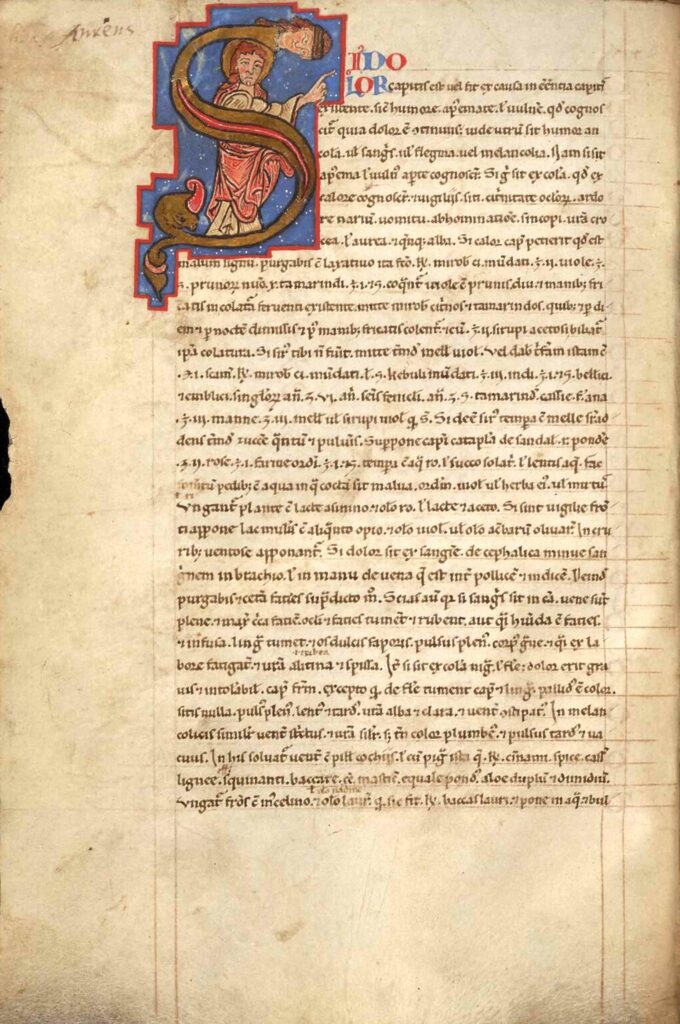
Figure 4. Beginning of the Liber aureus, late 12th or early 13th centuries (MS Clare College, 12, f. 104v, Cambridge).
The history traced here, from the Kitāb al-Malakī to the Liber aureus, follows the thread of sources that are, for the most part, still unedited and not available in modern translations. Both the Kitāb al-Malakī and the Pantegni circulated in more than a hundred copies, and much study is still needed to shed light on their circulation and value for the assessment of the text in a philological-historical perspective. The complex pharmacotherapeutic vocabulary of the Liber Regalis, the outcome of Stephanus’ attempt at exploiting the resources of Greek, Arabic, and Latin to present a complete version of the Kitāb al-Malakī, poses significant challenges to modern scholars, and the intricate web of sources in the Liber aureus turns its edition into a complete research endeavour into the history of earlier Latin and Arabic medical works.
Yet, this essay aims to showcase how crucial the detailed study of these works is for our understanding of the history of medicine in the second half of the eleventh and the early twelfth centuries, both in southern Italy and in Antioch. Located at the crossroads of the Mediterranean, and in between the (not-so-dark) early medieval Latin medicine and the Graeco-Arabic developments, translators like Constantine, Stephanus, and Iohannes acted as collectors and organisers of knowledge in a way that imitated and surpassed their models. The sophisticated rationale of their work still awaits to be fully appreciated by modern scholars.